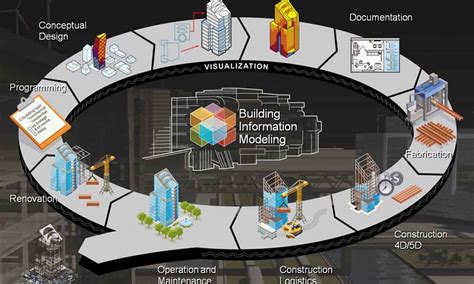
BIM Level 2 was actually made a mandatory requirement in April of 2016 on all publicly tendered projects in the UK. France followed shortly after with their own mandate in 2017.
At level 2, all team members use 3D CAD models but sometimes not in the same model. This integration helps every stakeholder, from developers to facility operators, turn design intelligence into ongoing operational performance.
Here’s how different groups benefit:
1.
Developers and construction firms
Ensure a seamless data handover from construction to operations.
Deliver projects that stay intelligent beyond completion.
Strengthen long-term client relationships through operational-ready models.
Why it matters: Extend BIM’s value post-handover — proving you build smarter, not just faster.
4.
Teams can visualize infrastructure layers, identify interdependencies, and make informed decisions without guesswork or repeated site visits.
5. With this calculator, you will see how to save on operational costs and time.
When integrated with FM systems like Facilio, BIM reduces lifecycle costs through proactive maintenance, asset optimization, and improved energy performance.
The future: BIM meets Connected FM
Modern buildings demand connected, data-driven management.
This helps teams anticipate service needs, schedule maintenance proactively, and extend asset life — reducing downtime and emergency repairs.
6. Many firms are at Level 1 BIM, which doesn’t involve much collaboration, and each stakeholder publishes and manages their own data.
Level 2 BIM: teams work in their own 3D models
Level 2 BIM begins to add in a collaborative environment.
Design clashes between systems (like electrical and plumbing) are detected early, reducing rework and construction delays.
4. W
When BIM is connected to real-time building performance systems, it becomes the backbone for advanced capabilities like fault detection and diagnostics that help teams catch anomalies early and respond proactively.
What are the benefits of BIM?
Building Information Modeling (BIM) delivers measurable advantages across every stage of the building lifecycle, from early design to ongoing facility operations.
By unifying data, workflows, and visualization, BIM drives efficiency, accuracy, and collaboration like never before.
Here’s how it translates into real-world impact:
1.
The next step is to realize its full potential, utilizing that same intelligence to drive smarter and more efficient operations.
And that’s exactly where Facilio’s Connected Buildings platform stands out. This allows the model to remain consistent and coordinated throughout the entire process so that structural engineers, architects, MEP engineers, designers, project managers, and contractors can work in a more collaborative environment.
Example of a BIM object: Optibal W6 ball valve with Actuator - downloaded from the manufacturer and used by plumbing engineers in their BIM models.
The “I” in BIM
BIM, as a whole, refers to the process of all parties involved in the construction and lifecycle management of built assets, working collaboratively and sharing data.
Simplify renovations and retrofits
With accurate as-built data in hand, upgrades or repairs become far easier to plan.
However, the way in which stakeholders exchange information differentiates it from other levels. Singapore's CORENET X requires BIM submissions for building approvals, using OpenBIM standards to automate code checking. Since data is shared this way, the CAD software must be capable of exporting to a common file format, such as IFC (Industry Foundation Class) or COBie (Construction Operations Building Information Exchange).
Level 3 BIM: teams work with a shared 3D model
BIM level 3 is even more collaborative.
Early detection reduces costly on-site changes and ensures that operational systems are installed correctly from day one.
8. As design solidifies, elements gain specific properties—wall assemblies, structural sizes, equipment specs (LOD 300)—enough for coordination but not fabrication.
For Contractors (LOD 350-400): Construction-level models include connecting and interfacing information.
Changes to the model automatically update quantities and costs, helping project teams make informed decisions about design alternatives and stay within budget.
Asset Management and Facility Management
BIM's value extends beyond construction. Instead of each team member working in their own 3D model, Level 3 means that everyone uses a single, shared project model.
The as-built BIM model becomes a digital twin of the facility, containing critical information for operations and maintenance:
Equipment specifications and warranty information
Maintenance schedules and service history
Spare parts and supplier details
Space management and occupancy data
For asset-intensive facilities like data centers or hospitals with complex M&E systems, BIM-enabled facility management reduces operational costs and improves building performance.
Government agencies worldwide are adopting BIM for regulatory approval.
It significantly shortens review cycles and improves coordination among design and construction teams.
2. For example, if an architect adds a new air conditioning unit, the system automatically shows how it affects the electrical layout and cost.
When BIM connects with a CAFM system(Computer-Aided Facility Management), it becomes even more powerful.
Owners receive LOD 500 as-built models with facility management data in COBie format for operations. Turn maintenance from reactive to predictive
When BIM connects with your CMMS or digital twin, maintenance planning becomes proactive. LOD 400 provides exact routing, supports, connections, and clearances contractors need to build.
For Owners (LOD 500): The as-built model represents what was actually constructed, including field changes.